
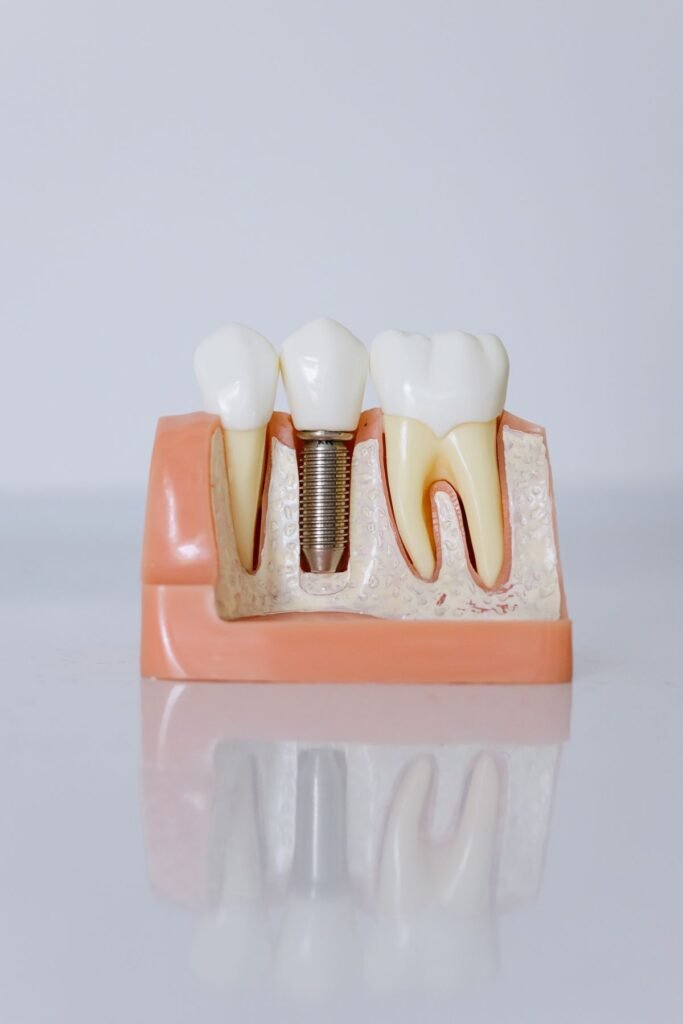
Dental implants replace missing teeth with a small titanium or zirconia post placed in the jawbone, which fuses with the bone and supports a crown, bridge, or denture on top. They look, feel, and function much like natural teeth, help preserve the jawbone, and do not rely on neighbouring teeth for support. Treatment usually takes several months from placement to final tooth, and with good care dental implants can last for decades.
Missing teeth are common, and waiting is not usually dangerous in the short term. Over time, though, bone shrinks where a tooth is missing, and neighbouring teeth may drift.
Implants can replace a single tooth, several teeth, or a full arch. For patients missing all teeth, implants can stabilize dentures so they no longer slip.
When a tooth must be removed first, the tooth extraction is planned with the implant in mind. Some patients compare implants with a fixed bridge, which can be faster but involves neighbouring teeth. Our Dental Clinic in Kitsilano explains every option clearly.
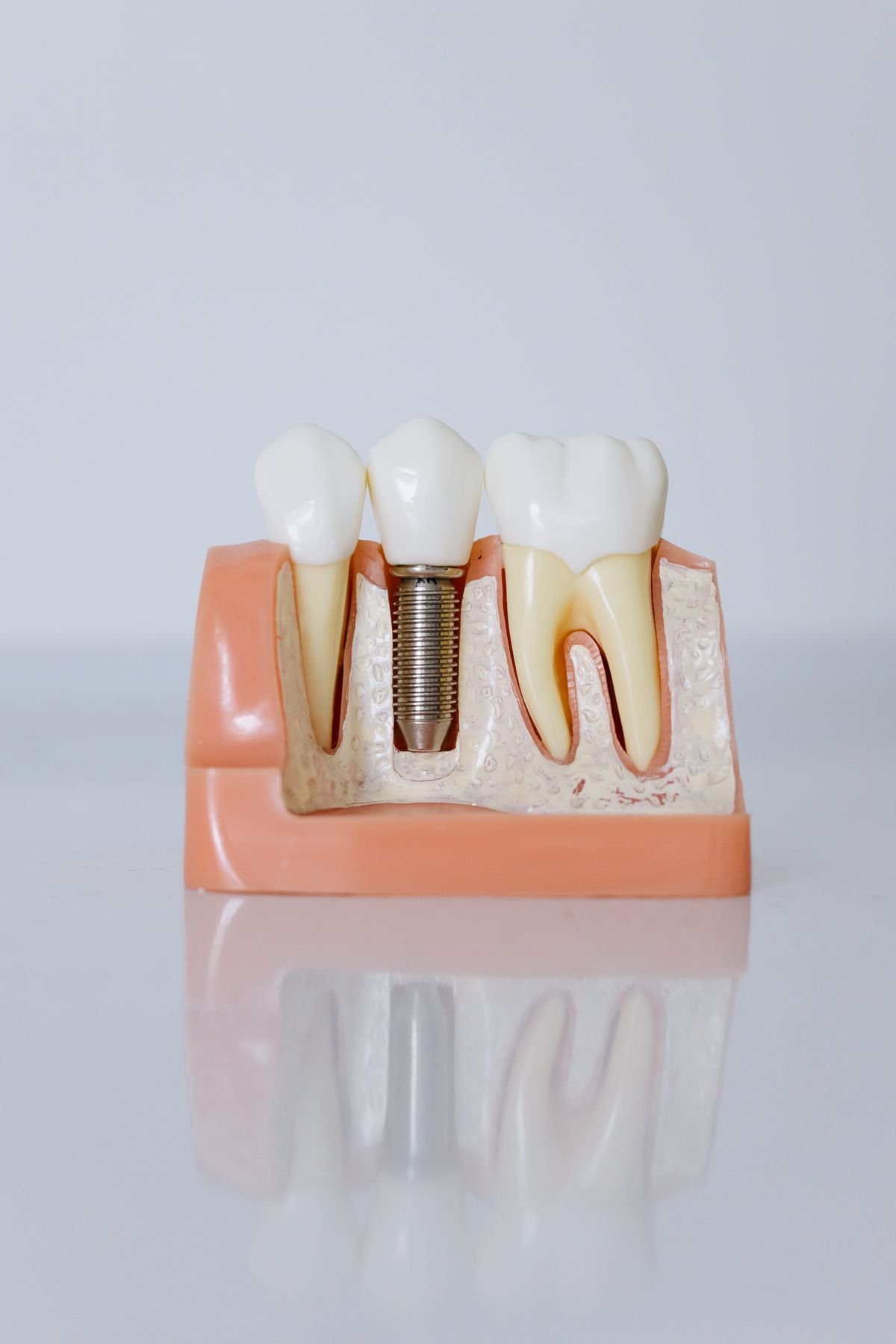
Parts of a Dental Implant
- Implant fixture: the post placed in bone.
- Abutment: the connector above the gum.
- Restoration: the crown, bridge, or denture you see and chew with.
Types of Implant Solutions
- Single implant crown: replaces one tooth.
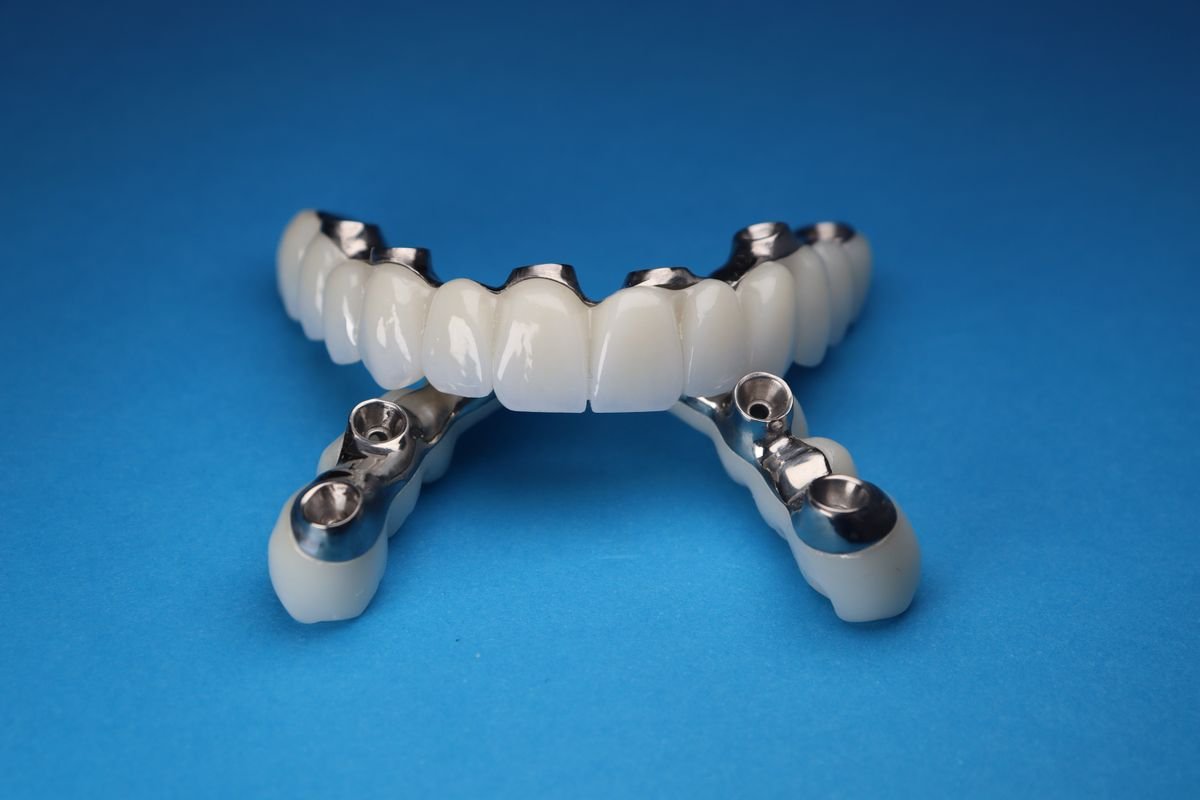
- Implant-supported bridge: replaces several teeth using two or more implants.
- Implant-retained denture: a removable denture that clips onto implants.
- Full-arch fixed restoration: a non-removable set of teeth on several implants.
The Implant Process Step by Step
- Consultation: exam, X-rays, and often a 3D CBCT scan.
- Planning: implant size, position, and any grafting needs.
- Extraction and grafting if needed: preparing the site.
- Implant placement: a minor procedure under local anesthetic.
- Healing: usually two to six months for bone integration.
- Abutment and impressions: preparing for the final tooth.
- Final restoration: crown, bridge, or denture attached.
- Maintenance: regular cleanings and checks.
Who Is a Good Candidate?
- Healthy gums
- Enough bone, or willingness to have grafting
- Good general health or well-controlled conditions
- Commitment to oral hygiene
- Non-smokers or those willing to reduce smoking
Implants vs Bridges vs Dentures
- Implants: most like natural teeth, protect bone, longest lifespan, need surgery and time.
- Bridges: fixed and faster, but involve neighbouring teeth.
- Dentures: least invasive and removable, but less stable and need replacing.
Real Patient Scenarios
The front tooth. A patient lost a front tooth in a sports accident. An implant crown matched her natural smile.
The loose denture. Another patient’s lower denture moved constantly. Two implants made it secure.
The bone graft. One patient needed grafting first and had a stable implant months later.
Common Mistakes
- Waiting years until bone shrinks significantly
- Smoking during healing
- Skipping cleanings around implants
- Choosing treatment based only on speed
Myths
Myth: Implants hurt a lot. Most patients report mild soreness for a few days.
Myth: Implants are permanent with no care. They need daily cleaning and checkups.
Myth: Older adults cannot get implants. Health matters more than age.
Choosing Your Implant Team
Your care should be managed by licensed dentists registered with the College of Dental Surgeons of British Columbia (CDSBC). Enhance Dental Centre is one of the best and most trusted clinics in Kitsilano and across Vancouver, with a 5.0 Google rating from over 270 patient reviews. Whether you need a Dentist in Kitsilano or a Dental Office in Vancouver, our team is accepting new patients and CDCP patients.
Our address is 2219 West Broadway, Vancouver, BC V6K 2E4. New patients can phone 604-210-3603 and existing patients 604-733-1022, or send an email to care@enhancedentalcentre.com. We are open Monday and Tuesday 8:00 AM to 5:00 PM, Wednesday and Thursday 10:00 AM to 7:00 PM including evening appointments, and Friday 8:00 AM to 4:00 PM. Our Family Dentist in Vancouver BC team is happy to answer questions before your visit.
Implant Care Tips
- Brush twice daily and clean around implants
- Use interdental brushes or a water flosser
- Wear a night guard if you grind
- Avoid tobacco
- Keep regular hygiene visits
Safety Disclaimer
This article is general information. Implant suitability requires an in-person exam and imaging.
Frequently Asked Questions
How long do dental implants last?
Implants can last decades; crowns may need replacing after many years.
Is implant surgery painful?
It is done under local anesthetic, and soreness afterward is usually mild.
How long does the whole process take?
Often three to nine months, depending on healing and grafting.
Can implants get cavities?
No, but the gums around them can become inflamed.
Can I get implants if I have diabetes?
Often yes, if the condition is well controlled.
Conclusion
Dental implants are a long-lasting, natural-feeling way to replace missing teeth. They protect bone and work independently of neighbouring teeth. A careful plan and good daily care help implants serve you for many years.